
Light Comparisons
Compare hunting light distances, sizes, beam patterns and infrared options to find the right light for your setup.
Light Distances & Candela
How Far Will Our Lights Shine?
We use the ANSI/NEMA FL-1 testing method to determine beam distance and candela. This provides a consistent way to measure and compare flashlight performance.
Shine distance is not the same as identification distance. A light may illuminate an animal's eyes at a greater distance than you can clearly identify the animal itself.
Humidity, rain, air clarity, eyesight, scope quality and other field conditions all affect how far you can identify an animal.
Example: A light rated for 600 yards may allow identification at approximately 300–400 yards.
Current Light Distance Chart
Compare red, green, white, 850nm IR and 940nm IR performance. Distances are measured in yards. The chart includes candela ratings for visible LED colors.
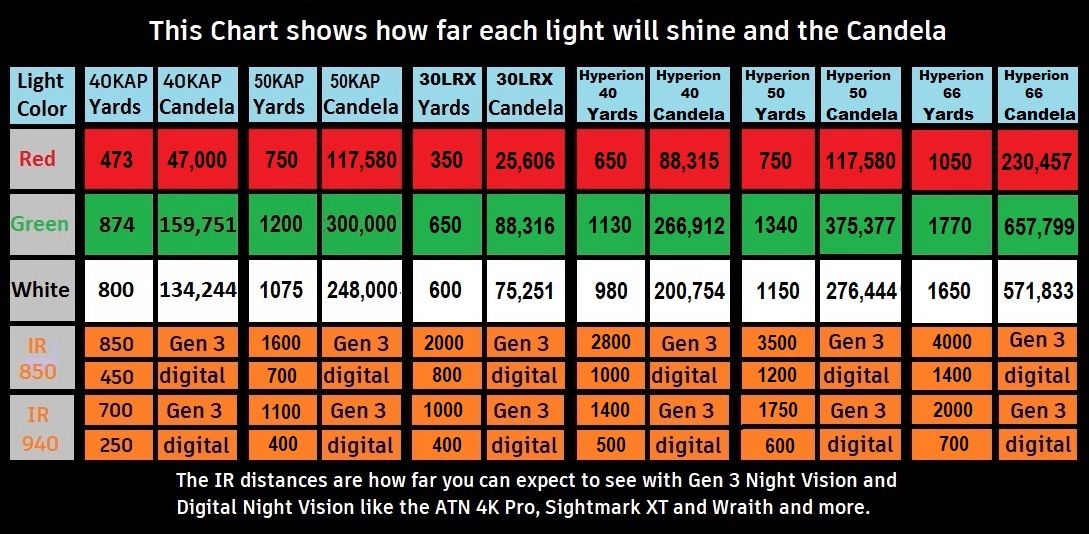
Chart published in 2024. Confirm current model specifications when comparing with newer product listings.
Understanding Candela
Candela measures the intensity of light at the brightest part of the beam. A higher candela rating generally indicates a more concentrated beam with greater potential distance.
Lumens measure total light output, while candela helps explain how strongly that light is concentrated. This is why two lights with similar output can have different shine distances.
What Is ANSI/NEMA FL-1?
ANSI/NEMA FL-1 is a standardized method for reporting flashlight performance. It covers light output, runtime, peak beam intensity, beam distance, water resistance and impact resistance.
Under this standard, beam distance is calculated using the distance at which the beam produces 0.25 lux of illumination. It is a standardized measurement, not a guarantee of animal identification distance.
Older Light Distance Chart
For customers using older Sniper Hog Lights models, including discontinued LRX and Coyote Cannon lights.
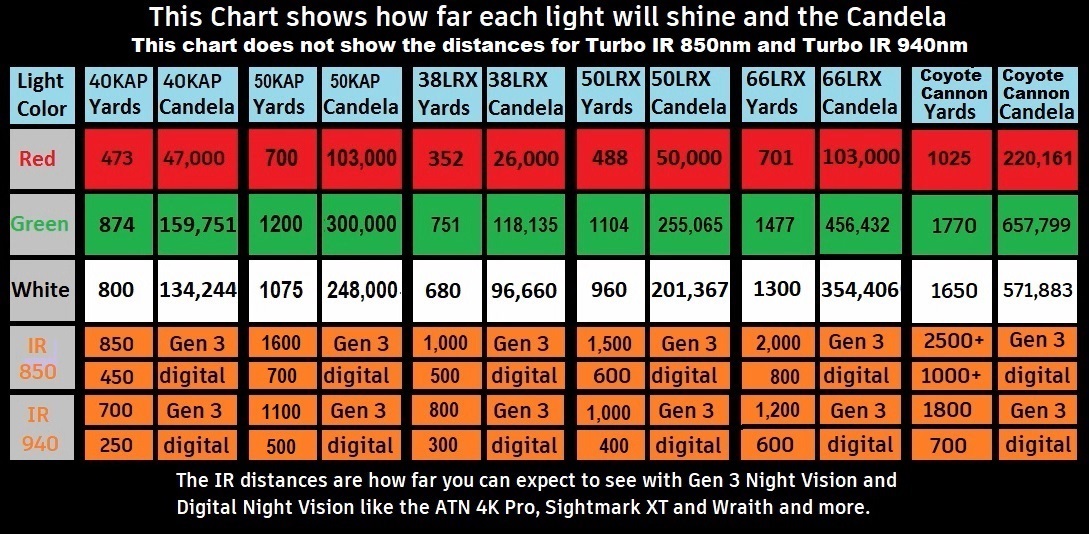
Historical chart. Older IR modules and model specifications may differ from current products.
Light Size Comparison
Compare Light Sizes & Weights
The size and weight of your hunting light can be just as important as shine distance. Larger heads generally provide a tighter beam for longer distances, while smaller lights are easier to carry and mount.
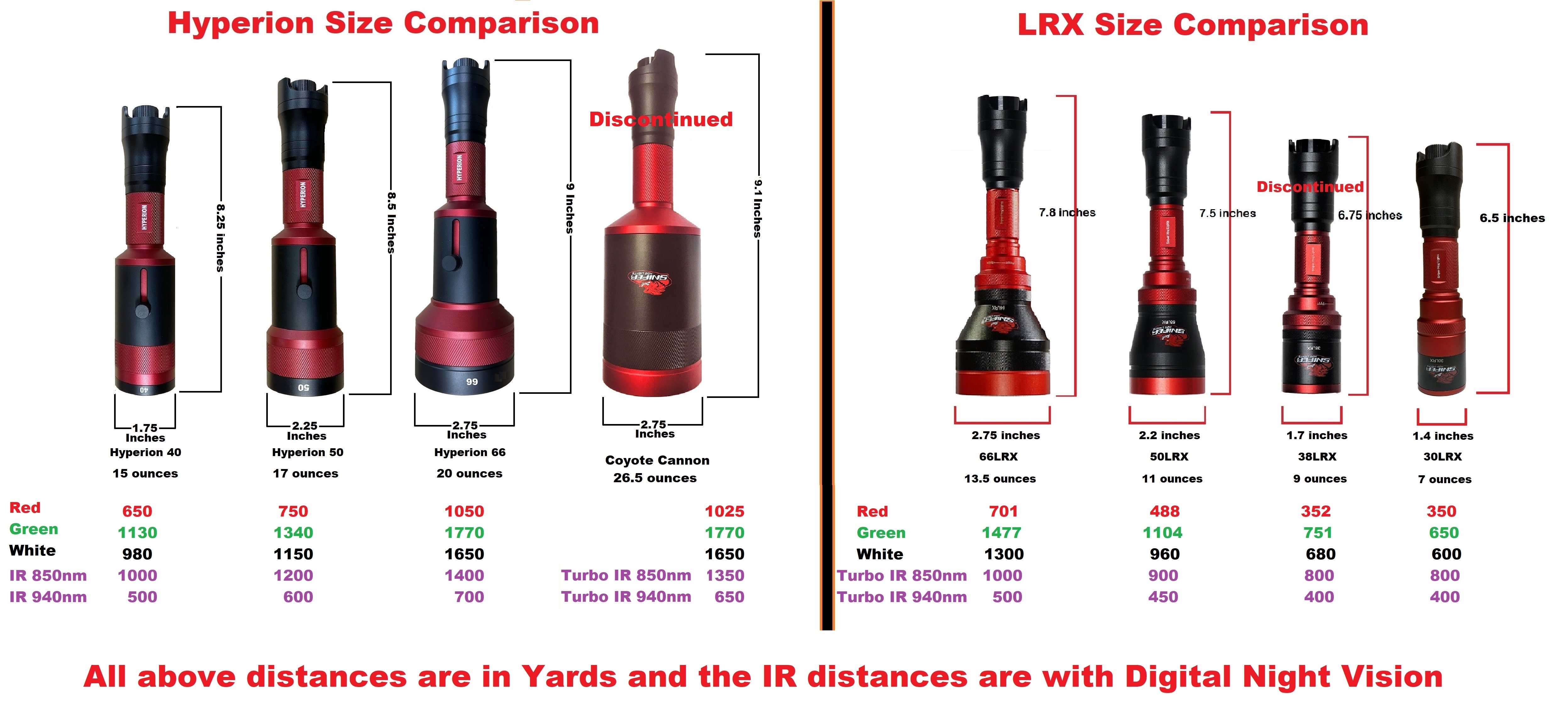
This comparison includes older models for reference. The Coyote Cannon, 38LRX, 50LRX and 66LRX shown are discontinued.
Hyperion Size & Weight
| Model | Length | Head Diameter | Weight |
|---|---|---|---|
| Hyperion 40 | 6.25" | 1.75" | 15 oz |
| Hyperion 50 | 6.5" | 2.25" | 17 oz |
| Hyperion 66 | 6.8" | 2.75" | 20 oz |
Measurements are taken from the existing light size comparison chart.
Hyperion 40 vs. 50 vs. 66
What's the Difference?
The Hyperion 40, 50 and 66 use the same light output. The main difference is the size of the head, which changes the beam pattern and how far the light shines.
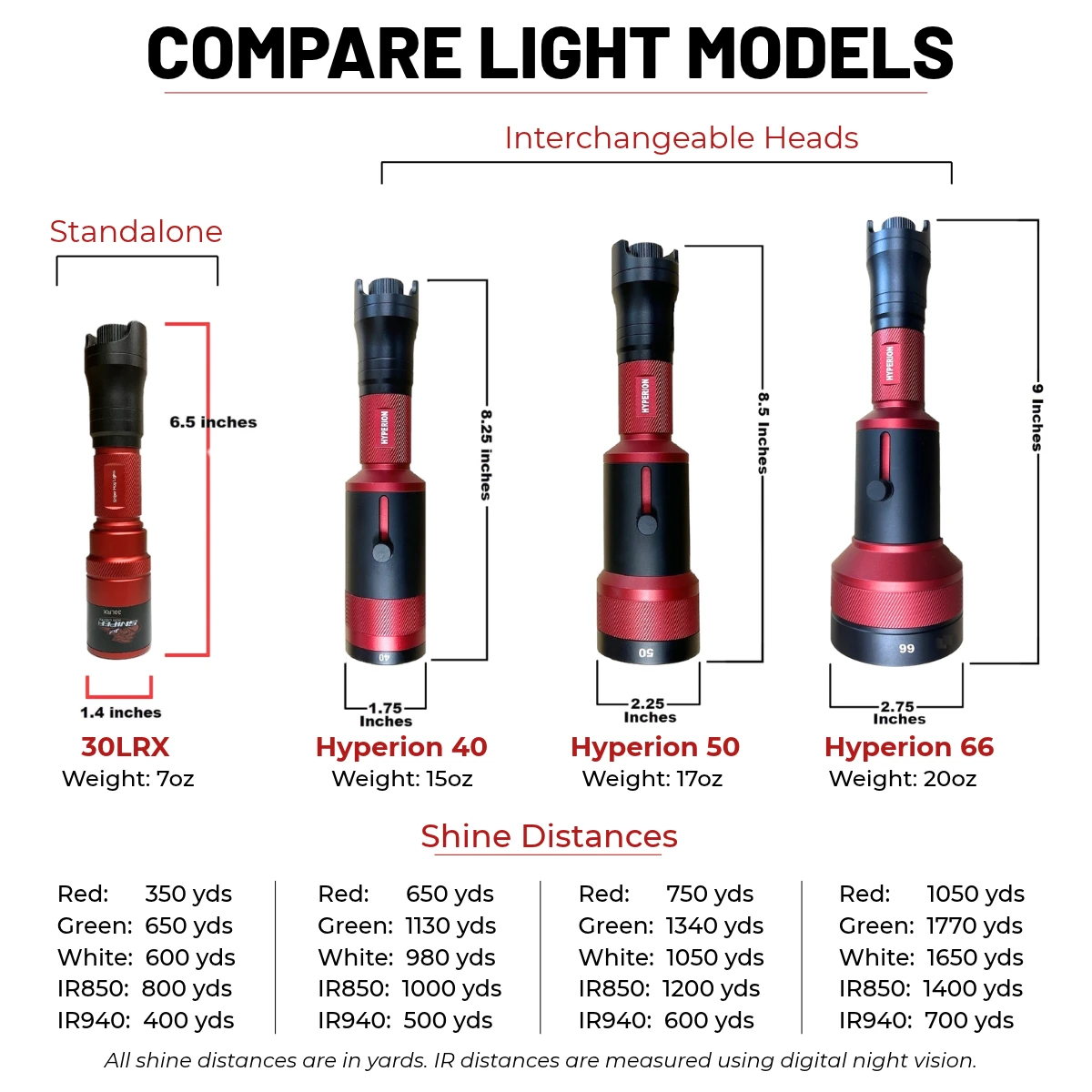
Hyperion 40: Smallest head with the widest spot beam of the three.
Hyperion 50: Middle-size head with a balance of beam width and distance.
Hyperion 66: Largest head with the tightest spot beam for maximum shine distance.
Hyperion Shine Distances
| LED Color | 40 | 50 | 66 |
|---|---|---|---|
| Red | 650 | 750 | 1,050 |
| Green | 1,130 | 1,340 | 1,770 |
| White | 980 | 1,150 | 1,650 |
| 850nm IR* | 1,000 | 1,200 | 1,400 |
| 940nm IR* | 500 | 600 | 700 |
All distances are in yards. *IR distances shown are from the existing digital night vision comparison chart. Gen 3 night vision distances differ.
Interchangeable Hyperion Components
All Hyperion 40, 50 and 66 lights use interchangeable heads, LED modules and tail caps.
For example, if you own a Hyperion 40 and later want a longer-distance beam, you can purchase a Hyperion 66 head instead of replacing the entire light.
Which Hyperion Should You Choose?
Hyperion 40: Best when a smaller, lighter light and wider spot beam are priorities.
Hyperion 50: A middle-ground option for hunters who want a balance between size and long-range performance.
Hyperion 66: Best when maximum shine distance is the priority and a larger light is not a concern.
850nm vs. 940nm Infrared
Which IR Wavelength Is Right for You?
Infrared (IR) lights are designed for use with compatible night vision equipment. The two common wavelengths are 850nm and 940nm.
850nm IR
Best for longer shine distances.
850nm produces brighter illumination and shines farther than 940nm. It provides greater distance for identifying animals through compatible night vision equipment.
940nm IR
Best for a less noticeable red glow.
940nm produces a much less noticeable red glow at the LED but shines approximately 50% less distance than 850nm. It is an option for hunters who prioritize reduced glow over distance.
850nm vs. 940nm: Quick Comparison
| Feature | 850nm | 940nm |
|---|---|---|
| Shine Distance | Shines Farther | Shines Approximately 50% Less Distance |
| Visible Emitter Glow | Faint red glow | Much less noticeable |
| Night Vision | Compatible equipment required | Compatible equipment required |
| Primary Advantage | Distance | Reduced glow |
Hyperion Turbo IR
All Hyperion lights purchased with an IR LED module come with Turbo IR only. Regular IR is not available for Hyperion models.
Turbo IR provides:
- A tighter, more focused beam
- Longer identification distances
- A clearer digital night vision image
850nm provides brighter illumination and longer shine distances than 940nm, whether using Turbo or Regular IR.
Regular IR modules are available separately for compatible LRX lights only. They are not included with complete Hyperion lights.